
Report
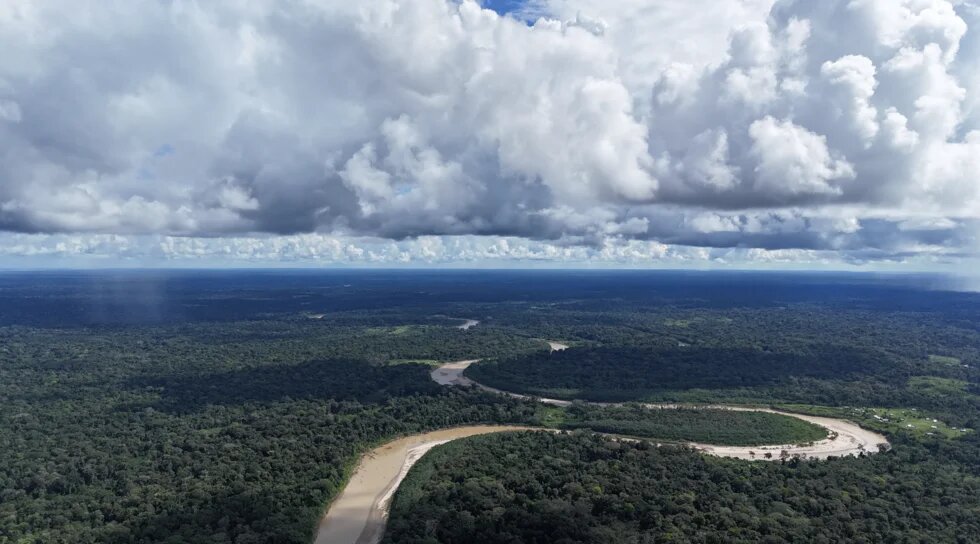
In the Brazilian state of Acre, dominated by the Amazon Rainforest and inhabited by a diverse population, members of Generation Z who live in extractive reserves recognise that their future hangs on the effective management of natural and cultural resources and respect for local ways of life. The pressures of economic and state interests have threatened these lands in the past and continue to pose challenges to the preservation of ancestral knowledge and lifestyles. Still, Gen Z dares to dream of a hopeful future, placing emphasis on collective action and community mobilisation to safeguard this territory and its heritage.

For those who live in conservation areas such as the extractive reserves of the Brazilian state of Acre, located in northwestern Brazil on the border with Peru and Bolivia, the forest is neither a distant landscape nor an abstract environmental concept. It is home, work, memory, and future. It is the place where families have built their lives for generations, where children learn from an early age to recognise the rainy season, the sounds of animals, and the value of community. At the same time, it is a territory marked by historical disputes, persistent inequalities, and the absence of the State in guaranteeing basic rights.
The Context
Extractive reserves, as a type of conservation unit, were created by the Brazilian government after rubber-tapping families living in the rainforests of Acre allied with Indigenous peoples and social movements became involved in resistance and mobilisations to stop the privatisation and subsequent deforestation of the rainforest for cattle ranching in the 1970s and 1980s. These populations organised themselves into rural workers' unions and called themselves extractive populations to highlight the importance of collecting (extracting) fruits, bark, leaves, and seeds of the rainforest for their livelihood without harming the ecosystem. Together with other communities in the Brazilian Amazon basin, they created the National Council of Extractive Populations (Conselho Nacional das Populações Extrativistas, or CNS) in 1985. Since then, the CNS has been an important driver of policies tailored to the populations living in extractive reserves and serves as a representative of the demands of local populations.
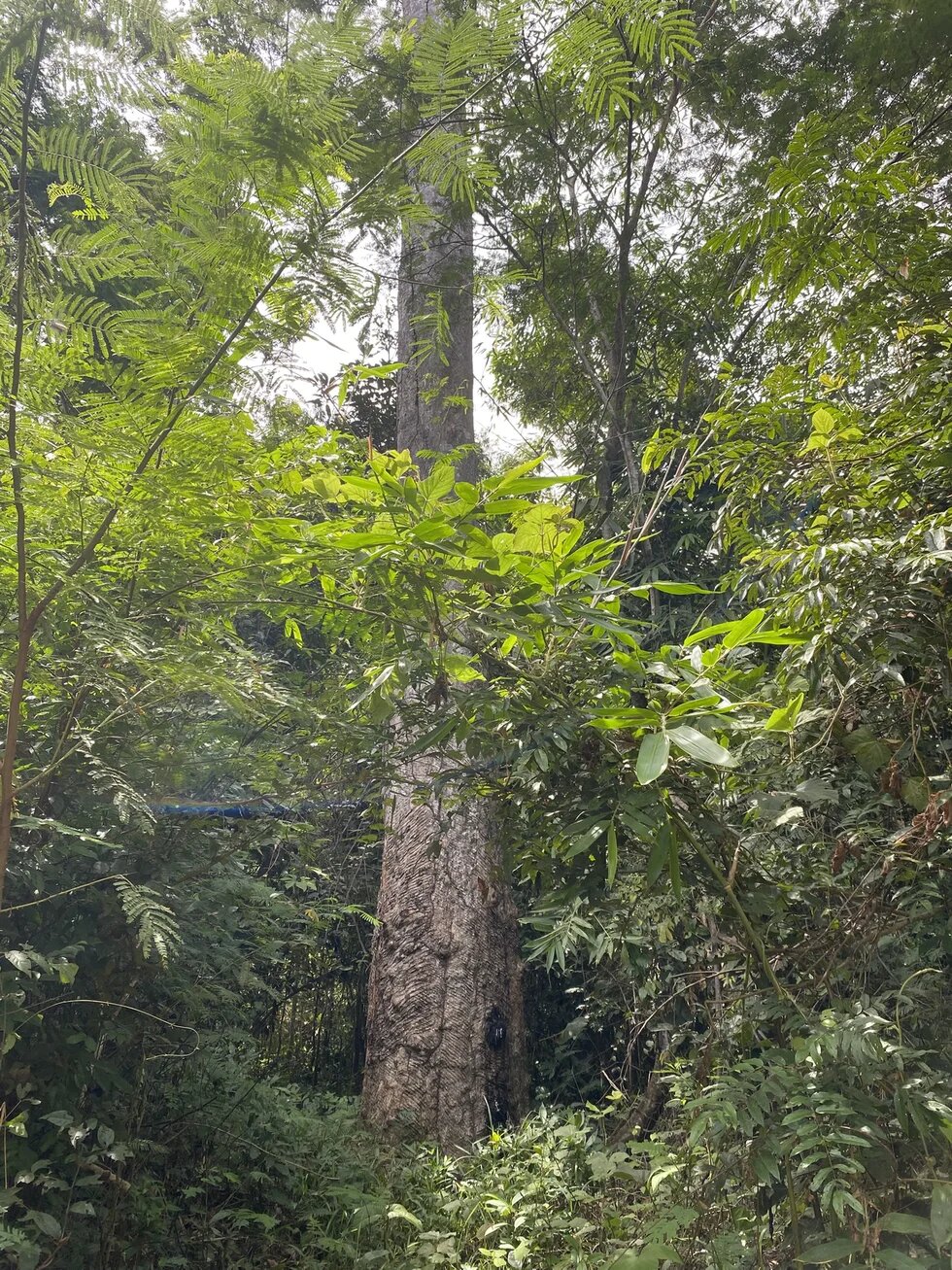
In the 1980s, the rubber tappers’ struggle gained international attention and demonstrated that it was possible to live off the forest without destroying it. Their goal was to be recognised as traditional populations with a culture linked to the rainforest and, in this way, to legitimise their demands to receive land use rights over the places they already inhabited. As a consequence, in the 1990s the Brazilian government agreed to create a type of conservation unit called an ‘extractive reserve’ with the dual aims of protecting the ecosystem and allowing for a forest-based lifestyle consisting of the collection of non-timber forest products such as rubber and Brazil nuts, subsistence farming, and the holding of small animals.
However, decades after its creation, the young people who live in these territories today – especially Generation Z – face new challenges that call into question not only their continued presence in the forest but also the future of extractive reserves as a conservation model.
This article is based on interviews with young people from the Chico Mendes, Alto Juruá, Alto Tarauacá, Cazumbá-Iracema, and Riozinho da Liberdade Extractive Reserves (reservas extrativistas, or RESEX). Based on their statements, we reflect on how these young people perceive the present, imagine the future, and build dreams that are often more collective than individual. In doing so, we seek to answer a central question: what allows, or prevents, young people from the rainforest from dreaming of a future within their territories?
This article also arises from two intersecting paths: the path of Laiane, who has lived with, listened to, talked to, and mobilised young people from various communities for years within the RESEX through workshops, conversation groups, meetings, and trips along gravel roads and in boats; and the path of Claudia, who is a researcher seeking to understand how these young people are rooted to these territories and what meanings they construct regarding their futures. We have combined practical experience, research, and the voices of youth living in the extractive reserves to write this text.
The Forest as Home
The five extractive reserves we focus on in this article are much more than a map or a category of environmental protection. They are communities, rivers, histories of struggle and resistance. These are the places where many families have built their homes and raised their children, forging community ties with neighbours and living off what they harvest in the rainforest.
But they are also territories that bear deep scars: the violent suppression of the empates, strategies of peaceful resistance that sought to defend against deforestation; the murders of land defenders such as Chico Mendes and Wilson Pinheiro; the social and economic consequences of the State's abandonment. However, the same communities that suffered these challenges managed to obtain land use rights and start projects for their own benefit through collective efforts. This history is not just the past; it is the basis of what young people are experiencing today.
At present, those who live in the communities of the RESEX, especially those from Generation Z, face a reality full of contrasts: they have a forest that teaches and welcomes them, but the lack of public policies limits their opportunities. They deal with smoke from fires, precarious education, and distance from essential services, yet they carry within themselves enormous hope for a better future and intergenerational knowledge about the rainforest.
Getting to Know the Territory Through Popular or Formal Education
One of the great victories of the socio-environmental movement of the 1980s was an auto-organised education programme called the Seringueira Project, named for the rubber tree that has financially sustained many Acrean families for decades. Inspired by Paulo Freire's methods of popular pedagogy, this programme not only taught literacy but also showed the importance of collective community organisation (cooperativism) to the people living in the territories that, in the 90s and 2000s, would become extractive reserves.
With the Seringueira Project, hundreds of rubber tappers and their children learned to read and write in a contextualised way. However, the literacy programme was institutionalised by the state of Acre in 2008 and later replaced by state schools following a national curriculum. Since then, many people living within the RESEX have wondered why schools devote more attention to questions related to southern Brazil and cities like São Paulo and Rio de Janeiro than to the conditions and history of the territories they inhabit.
In this context, teachers can become important actors who adapt the school curriculum to local realities. For example, we interviewed a high school teacher in Seringal Floresta, in the Chico Mendes Extractive Reserve, during the 2024 dry season. She taught her students about climate change by instructing them to take photos of forest fires and the streams near their homes. Students were also tasked with asking the oldest member of their household, often a grandparent, about water availability in the past. Everyone reported that the igarapé (Amazon watercourse) never used to dry up. The teacher noted that one student told her, ‘Teacher, if it's like this now, imagine what it will be like in the future. My father and uncle said that this didn't happen in the igarapé before.’
The number of streams that have become desiccated in the last two Amazonian dry seasons (summer) has increased, causing stress for families as the land where they grow their food is left without water. In addition, if the stream dries up, there is a shortage of drinking water.
This situation has unequal impacts on the family members’ daily life, especially affecting women and girls, who have to walk long distances to fetch water, while at the same time making subsistence farming more difficult.
Between Migrating or Staying in the Seringal
The poor conditions in the RESEX, such as precarious health services, roads that become muddy during the rainy season and make mobility difficult, the lack of a guaranteed income, the devaluation of rubber tappers’ way of life, and the inadequate curriculum in schools, make life difficult for the local population.
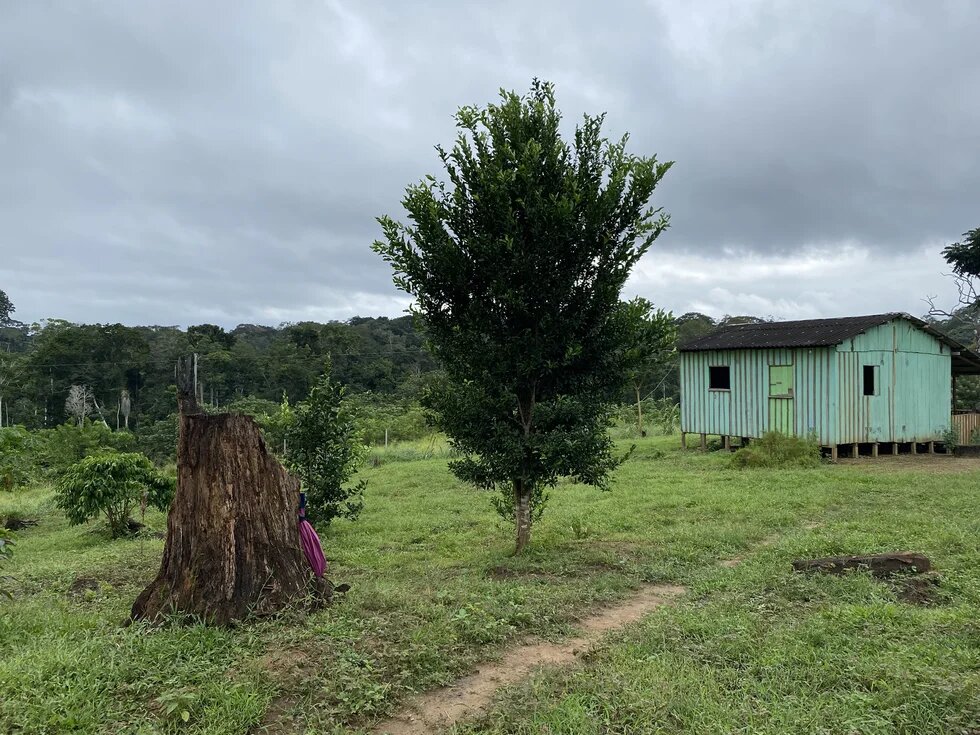
Many recognise these difficulties but at the same time do not romanticise the idea of life in the city. As one young reserve resident commented during an interview, the rainforest is ‘an opportunity we have to develop, to ensure our own survival … because we are in the rainforest and we have the space to plant vegetables such as rice or beans, cassava, to make flour. We have everything! We don't have that in the city. In the city, we are there on that little 20x30m plot of land, and on that little plot of land, you can't do anything!’
Those who are not from the rainforest often think that young people want to migrate to the cities, but many youths who live in the RESEX want to stay in the Seringal, the term for a neighbourhood unit within the extractive reserves. What often happens is that the living conditions within the reserve do not allow them to stay. Simultaneously, the city presents itself as a place where dreams can be fulfilled or where it is at least possible to earn income to support one’s family.
Moreover, most inhabitants of RESEX in Acre have relatives living in the city or have experienced living there for a few months. For this reason, they are aware of the difficulties that can arise in the city, where, as many say, ‘everything is bought’. In the RESEX, with access to land and a rainforest full of non-timber forest products, families do not need as many economic resources as in the city, which does not allow the possibility of planting or raising animals, forcing people to buy almost everything they need to survive.
The Voices of Generation Z in the Rainforest
While urban youth grow up connected to TikTok, the youth of the RESEX gain knowledge through more varied means: community life, the rhythm of the rainforest, and – when the signal allows – the digital world as well. In the last three years, the internet has arrived, first in community schools and now, little by little, in homes. This has allowed young people to access a globalised world full of music, memes, and information.
The internet grants young people the possibility to continue their studies from their homes in the forest. However, some still need to travel to nearby cities to continue their schooling or to complete university programmes, leaving them with one foot inside and one foot outside the reserve. With a motorcycle, the youth of the forest can leave for the city and then return, acting as bridges connecting different lifestyles. Thus, the internet and increased mobility have opened new horizons, but these opportunities have also brought painful comparisons with very different realities. Nevertheless, when the youth of the RESEX talk about the future, there is always a stubborn hope of having the best of both worlds.
The Forest as Part of the Family
For many young people, the forest is not the ‘environment’; it is family. It is the source of life for the community: it provides water, food, shade, income, stories, and also fears. They speak of the forest with affection and at the same time with concern because they feel that it is suffering. They who know the rhythms, sounds, colours, and smells of the forest observe that monkeys now sometimes invade the fields and eat more fruit. They suspect that, due to climate change, animals are coming closer to human settlements to search for food since the forest may no longer provide the same resources as before.
The young people of the extractive reserves say that the city does not understand community life based on the rhythms and characteristics of the forest, how to make a living without destroying the forest, and the importance of respecting nature's cycles. They want society to understand that living in the forest requires knowledge, effort, and wisdom and that the forest is not an empty space but a territory full of life. Those in the city must value this ancestral way of life and its technologies.
Individual and Collective Dreams
The individual dreams of young people in the RESEX involve professions related to caring for others and the territory as teachers, environmental agents, nurses, agroextractivists, or forest entrepreneurs. However, almost all these dreams are connected to a greater desire: not having to leave the RESEX to live with dignity.
Collective dreams are even more defined. Young people talk about united communities, schools that teach the history of the forest, income from extractivism (i.e., the collection of Brazil nuts, rubber, and other non-timber forest products), public policies designed for those who live in the forest, and respect for traditions. They dream of a living, inhabited RESEX, with young people participating in decisions that affect the territories.
For these young people who grew up knowing how to work with the forest, collecting Brazil nuts during the rainy season, tending fields that provide rice, beans, cassava, and other vegetables and fruits, it is important that both school curriculum and tertiary education support the reserves with knowledge that can strengthen rural lifestyles and train inhabitants in new technologies that can improve their lives.
The Future of RESEX
When we ask about the future, two scenarios emerge.
Many young people believe that, if nothing changes, cattle will only increase in the RESEX. It is important to remember that this conservation model was created in response to threats from big landowners who wanted to clear forest areas to raise cattle.
For many years, these forests have been home to rubber tapper families who understood that they would lose their livelihood if landowners took over these areas. Today, more than 40 years after these struggles, illegal cattle ranching in some reserves is an economic activity that is gaining ground because it allows families to earn more income, causing tensions within the communities and with governmental institutions. Many justify the activity because it allows them to save money to cover expenses for emergencies that arise. The picture is highly varied across the RESEX: some families continue to depend mainly on non-timber forest products and State social policies, while others are more involved in cattle ranching.
Young people believe that this development indicates that the RESEX must diversify the economic activities that provide adequate income to compete with cattle farming. If this does not happen, they are concerned that deforestation will increase, along with environmental problems such as smoke from human-caused forest fires and water shortages.
Given that young people will eventually need to earn a living, they fear that if the local economy does not improve, more young people will be forced to leave the RESEX. Another future scenario young people foresee if economic alternatives in the reserves are not diversified is that extractivism will be practiced less, which would lead to the loss of the culture and heritage of the populations engaged in rubber extraction.
When Everyday Life Is Difficult, Dreaming Becomes a Luxury
Imagining the future may not be accessible to everyone in the same way because when everyday life is difficult, dreaming becomes a luxury. Faced with a challenging daily life where basic education, health services, and income are lacking and the effects of climate change are intense, young people can dream, but it is difficult for them to fulfil many of their dreams due to their circumstances.
Even so, the youth of Generation Z in the RESEX – some of whom live in fear due to violence and criminal factions in the territory – fight for their lives, futures, families, and communities by involving themselves in community organisations and local projects that seek to strengthen rainforest value chains.
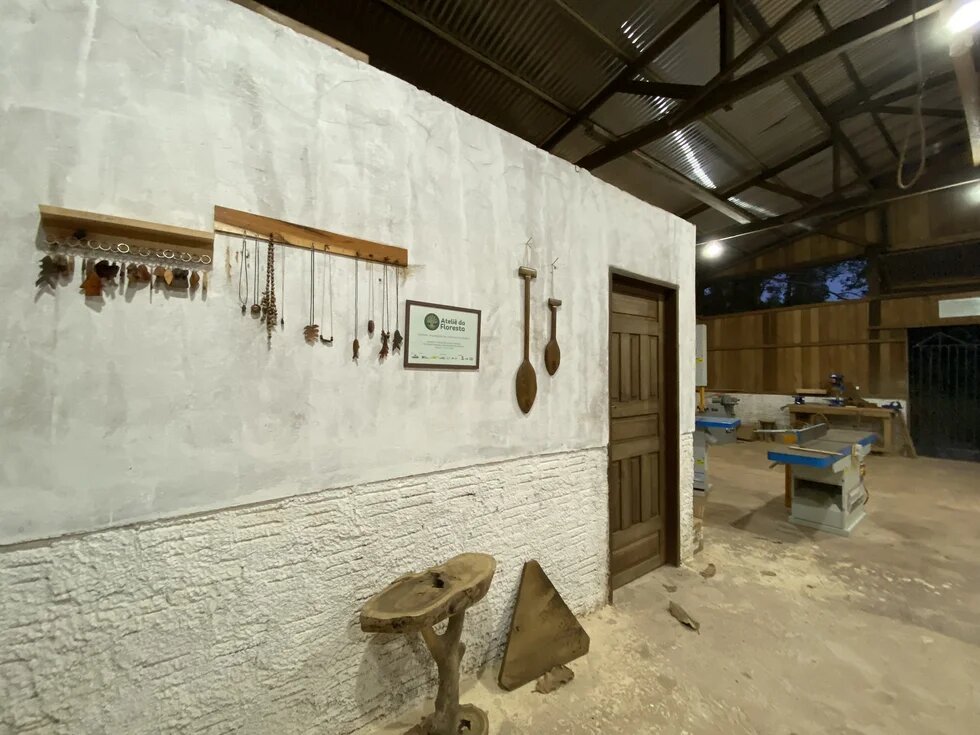
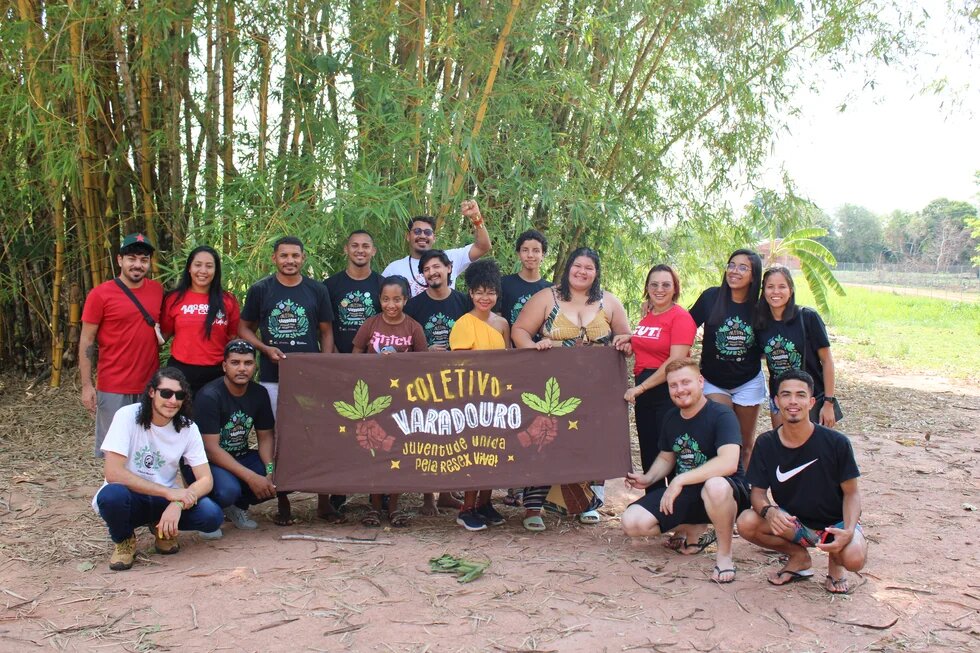
Community organisations such as the Varadouro Collective, which is a group of young extractivists from the five extractive reserves in the state of Acre, serve as meeting points. They gather, sometimes in person and sometimes digitally, to coordinate interests and listen to the dreams and concerns of young people. It is there and in other encounters with family members, unions, community associations, and partners such as the Chico Mendes Committee that young people realise that their dream is not only theirs but belongs to an entire generation.
These groups contribute to preserving historical memory, continuing the work that their grandparents started. Grandparents transmit important territorial memories when they recall stories of how the land was conquered, when they walk in the forest with children and young people, and explain how a plant is used or who the guardians of the forests are. Young people believe it is important to strengthen their connection to the history of the RESEX and recognise that even if the lands change, there is a foundation they want to preserve built on love for the forests and respect for the people who safeguarded this territory for them to live in today.
Youth and Socio-Environmental Justice
Generation Z in the RESEX has concerns, fears, and uncertainties, but also great potential. Listening to these young people is essential to understanding the future of the Amazon, a forest that is so culturally and biologically diverse precisely because of how Indigenous peoples and other beings inhabit it. The voices of the youth of the rainforest illustrate that there is a way forward, there are alternatives, and there is hope, so long as they dream not only individually but collectively.
The young people of the extractive reserves want to be heard. They want their ideas to be taken into account in decision-making, their experiences to have weight, and their knowledge to be recognised. They understand that socio-environmental justice is not just about preserving the forest but also about allowing people, cultures, memories, and ways of life to flourish and continue to exist.
The future of RESEX is in their hands. The world needs to learn to listen to their voices.
The opinions expressed in this article are those of the authors and do not necessarily reflect the views of the Heinrich-Böll-Stiftung e.V.
This contribution is part of our dossier
Gen Z: Voices of a Global Generation
The dossier examines youth-led movements and collectives, their strategies and their visions for a just future. It also explores the roots of their discontent and its expression in digital spaces and the arts by bringing together young voices and perspectives from across the globe. The publication presents the diversity of youth-led movements in various formats.